The Outfitter
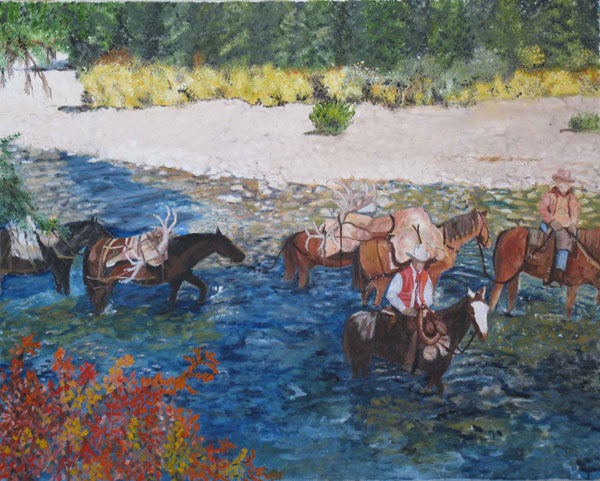
Oil on Canvas
30″ x 24″
Sold
Morris Ranch
Taking folks up into the national forests to hunt is an enterprise that causes heated arguments both pro and con. This is the tale of David Morris, a packer and guide, who has been memorialized in the Silvertip Basin for his conservation techniques and animal management program long before such things existed.
Dave, to support his family, also ranched, logged, and maintained the roads and ski slopes on the big mountain. Sometimes, when storms stretched into days upon days, he worked 24-hour, continual shifts clearing the roads. Sleep was something done after the storms subsided.
Dave always loved hiking and riding in the wilderness, particularly the Silvertip Basin, a rugged, steep area which was his sanctuary. His outfitter career began quite by chance. Locals and friends knew of his expertise and asked him to take them up to hunt for deer, mountain goats, bear and primarily elk. He gladly fulfilled their wishes and never charged. When someone suggested this was a way to make extra cash, he realized the potential of his friendly service. Thus began Dave’s life-long career as an outfitter. Three times per season he took ten hunters up to the Basin, where they stayed in stove-heated tents for ten days. He and his crew included among others, his brother, Lester; his wife, Helen; other relatives; and the present owner of the operation, Harry Workman. They made sure everybody had an enjoyable experience; got his much prized elk; and arrived safely back down, a challenging trip on those steep slippery trails.
All clients were picked up by Helen at the train station or airport and transported for a hearty, home-cooked meal before the adventure began. Her duties also included all the grocery shopping and that cooking best done in a real kitchen. In reality, the trek began long before the guests arrived. The campsite, the trail up to it, and the base camp had to be cleared and developed, adequate supplies for both hunters and horses had to be hauled up the Basin on horseback and made secure from bears. These included sleeping tents, the kitchen-dining tent, and wood for heat and cooking – the list was almost endless. To pack all this gear without injury to the horses, Dave, using a pair of portable scales, weighed everything to ensure the loads would be balanced and not too heavy. To guarantee he would not introduce foreign plants into the area, he grew on his ranch the wild grasses found in the Basin and packed this up for horse feed. Folks thought he was somewhat fool-hardy to raise and use Tennessee Walking Horses, but they proved to be a good choice. Sometimes the crew had to shovel the 12-mile track up the mountain, so the hunters could get to the destination safely. He limited his outfitting to 30 hunters per year, because he knew the size of the elk herds and felt any more would deplete the population. He cared for the environment, the animals, and his customers. To honor him the Forest Service named his hunting area after him.
When Dave contracted Alzheimer’s, Helen cared for him at home, but when he became too much for her to manage, he lived in a Kalispell nursing home. So that she could visit him daily, she begged rides and rarely missed a day. On Christmas, 2008, Dave passed away.